
The Research Library
Evidence-led skincare science — the mechanisms, the studies, and what's actually in (and out of) your routine.

Glycerin: The Unglamorous Humectant That Outworks Its Reputation
Hyaluronic acid gets the marketing budget. Glycerin gets the results. Here's what actually separates the two humectants, why glycerin sits high on ingredient lists that never mention it on the front, and why a good formula uses both.
"Dermatologist-Tested" and Six Other Phrases That Mean Less Than You Think
Seven phrases that appear on skincare packaging every day, and what each one actually requires — which in most cases is close to nothing. Plus the handful of claims that do carry real weight.

Dark Circles vs Puffiness vs Fine Lines: Three Different Problems
Three complaints, three unrelated causes — and one eye cream cannot address them equally. Here's how to tell which one you actually have, and what topical care can and can't do for each.
Vitamin E in Face Oil: The Companion Antioxidant
Every face oil needs an antioxidant, and vitamin E is the classic choice. Here's what tocopherol actually does in a bottle of oil, why the C+E pairing keeps showing up in research — and why our Face Oil uses a different one.

How to Read a Skincare Study (Without a Statistics Degree)
“Clinically proven” is doing a lot of work on skincare labels, and most of it is unearned. Five questions — no statistics degree required — will tell you whether a cited study means what the marketing wants you to think it means.
Bisabolol and Reactive Skin: Calming Without Numbing
“Calming” and “numbing” are not the same thing, and reactive skin can tell the difference. Here's what bisabolol actually does, why the chamomile-derived ingredient sits low on an ingredient list, and how to tell a soothing formula from one that just masks the sting.
The Minimalist Routine: Three Products That Cover the Fundamentals
Most people don't need ten steps — they need three that each do a real job. Here's the cleanse-moisturize-protect logic, when three is genuinely enough, and the one product to add when it isn't.
Ceramides at Night: Why Your Barrier Repairs on a Schedule
Your skin barrier does most of its repair work overnight — and loses the most water then too. Here's why a ceramide cream belongs in your PM routine specifically, and why the ratio of lipids matters more than the ceramide alone.

Daily Cleanser: The Barrier-Safe First Step That Also Evens Tone
Most cleansers are judged by how clean they leave you feeling, which usually means stripped. Here is the case for a gentle, licorice-based daily cleanser that protects the barrier while it works on tone, and who the Daily Cleanser suits.
Green Tea EGCG for Daily Defense: The Pollution Shield Explained
The antioxidant in green tea does something vitamin C can't do as well: it defends skin against the specific damage caused by air pollution. Here's the mechanism, the bioavailability catch, and why topical beats a cup of tea.
What Our Evidence Tiers Actually Mean (Strongest, Strong, Mixed)
Every Sorrel product page ranks its ingredients by evidence strength — including the word most brands would never print: mixed. Here is exactly what each tier means, and how to apply the same standard to any product you own.

Sunscreen: what we recommend — and why we don't sell one yet
Sunscreen is the one step of a morning routine we don't make yet — here's why, and the well-formulated options we'd point you to in the meantime.
Firming Cream: The Targeted Step for Neck and Jawline
The neck and jawline are where loss of firmness often shows first, yet most routines stop at the jaw. Here is the case for a targeted firming step, and the DMAE-and-CoQ10 logic behind it.
Is It Too Late to Start on Fine Lines in Your 40s?
No, it is not too late to start on fine lines in your 40s. Clinical trials of retinoids include adults into their 70s and still show improvement. Here is what the research says and what to do.

Post-Procedure Skincare: The First 72 Hours
In the first 72 hours after a peel, laser, or microneedling, skin is healing, not improving. Here is what to do — keep it clean, calm, and protected — and what to avoid.
Repair Serum: When Barrier Repair Is the Whole Job
Some serums add actives; the Repair Serum helps the barrier rebuild. Here is when barrier repair is the priority, and the centella-and-snail logic behind the formula.

Licorice Root: The Gentle Brightener Hiding in Your Cleanser
Licorice root rarely gets headline billing, but glabridin makes it a genuinely useful, gentle brightener — and a cleanser is exactly the right place for it. Here is why.
How Do I Fade Dark Spots Without Bleaching My Skin?
You do not need to bleach skin to fade dark spots. Here is how the gentle approach actually works — slowing pigment production and turnover — and why patience beats aggression.

Clearing Cleanser: The First Step for Breakout-Prone Skin
For breakout-prone skin, the cleanse step sets up everything after it. Here is the case for a gentle, tea-tree-based first step — and who the Clearing Cleanser suits.
Why Am I Breaking Out More as an Adult Than I Did as a Teen?
Adult breakouts are usually more hormonal than the teen kind, and the harsh old playbook backfires. Here is why — and the gentler approach that suits adult skin.
Layering Serums and Creams: Order, Quantity, Wait Times
Order, quantity, and wait times decide whether your routine works or fights itself. Here is a simple, evidence-led way to layer serums and creams.
Eye Cream: Why It's Not Just Face Cream in a Smaller Jar
The skin around the eyes is thinner, drier, and more expressive than the rest of the face. Here is why it warrants a dedicated product — and what the Eye Cream is built to do.
Zinc + Niacinamide: Why They're Always Paired
Niacinamide and zinc are paired constantly in skincare for breakout-prone skin. Here is what each does, why their mechanisms complement each other, and how to read the combination on a label.
Why Are Fine Lines Showing Up Around My Eyes First?
Fine lines tend to appear around the eyes first because the skin there is the thinnest on the face, the driest, and the most in motion. Here is why — and what actually helps.
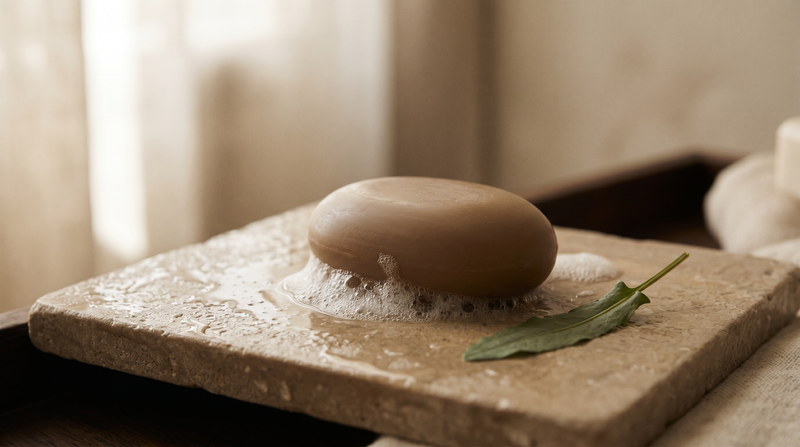
The Brightening Bar: A Cleanser-Step Approach to Dark Spots
Brightening usually lives in a serum. Here is the case for a cleanser-step approach with kojic acid and turmeric, and who the Brightening Bar suits.
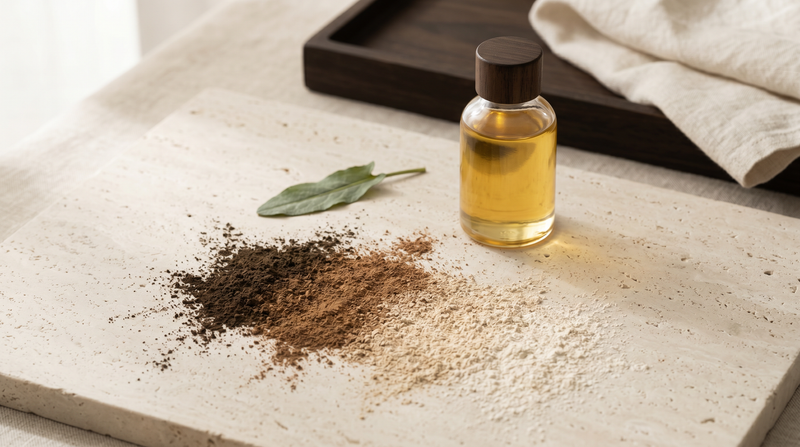
Why Do Dark Spots Take So Long to Fade?
Dark spots fade slowly because pigment sits at different depths and skin turns over on its own schedule. Here is why patience matters and how to support a more even-looking tone.
Your AM vs PM Routine: What Belongs Where
Some ingredients belong in the morning and others at night. Here is a simple, evidence-led way to split your routine between AM protection and PM repair.
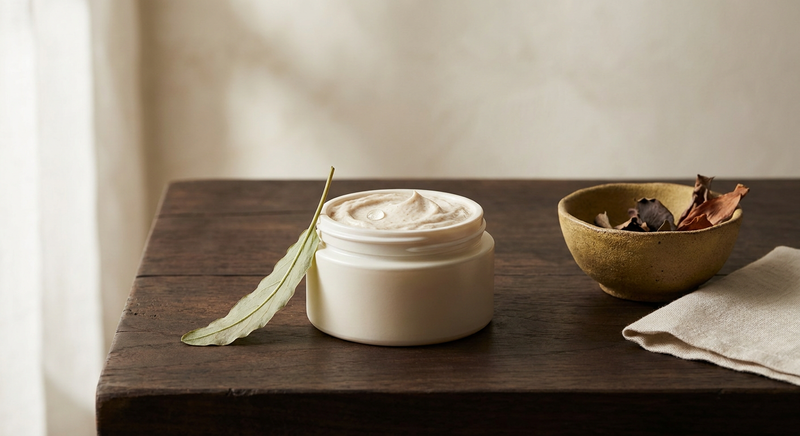
Dew Cream: The Lightweight Daily Moisturizer for Combination Skin
Lightweight does not mean less effective. Here is why the Dew Cream suits combination skin — niacinamide and allantoin in a finish that hydrates without sitting heavy.

Panthenol (Pro-Vitamin B5): The Quiet Barrier Helper
Panthenol converts to vitamin B5 in the skin, where it draws in water and supports a calmer barrier. Here is what pro-vitamin B5 does and how to read it on a label.

Why Do I Keep Breaking Out Along My Jawline?
Jawline breakouts usually follow a hormonal pattern, not a hygiene one. Here is why they cluster along the jaw and chin, and how to support breakout-prone skin without over-stripping it.

Best Skincare for Women Over 50
After menopause, skin loses collagen, moisture, and firmness. The evidence-backed routine: a retinoid, ceramides, a firming step, hydration, and sunscreen.

How to Reduce Redness: What the Research Points To
Most facial redness is the barrier reacting. Remove the triggers, then calm skin with centella, niacinamide, and fragrance-free hydration. Here is how.

Why Does Niacinamide Burn?
Niacinamide rarely irritates on its own. Burning usually means a compromised barrier, low-pH layering, or added fragrance. Here is how to use it.
Why Is My Skin Oily but Dehydrated?
Oily and dehydrated are different things. Harsh cleansing strips the barrier and worsens water loss. Here is how to balance oily, dehydrated skin.

How to Repair Your Skin Barrier
A damaged skin barrier feels tight, stings, and flakes. Here is what damages it and how to repair it — gently, with the lipids skin is built from.
Why Is My Skin Dry After Hyaluronic Acid?
Hyaluronic acid is a humectant — in dry air it can pull water from deeper skin to the surface. Here is why it happens and how to use it so it works.
Green Tea for Oily Skin: How Polyphenols Modulate Sebum
Green tea shows up in skincare as an antioxidant, but for oily skin its polyphenols do something else few products discuss: they reduce sebum production at the hormonal level by inhibiting 5-alpha-reductase. Here is the mechanism and the evidence.
CoQ10: The Mitochondrial Antioxidant Aging Skin Stops Making
Every cell that needs energy depends on coenzyme Q10, and aging skin makes less of it. Topical CoQ10 works through a mechanism genuinely different from the radical-scavenging antioxidants that dominate the aisle. Here is what the evidence actually supports.

Activated Charcoal in Cleansers: What It Actually Adsorbs (and What It Doesn't)
Activated charcoal arrived in skincare with enormous marketing momentum and a detox story that does not survive contact with the chemistry. Here is what it actually adsorbs, what it can't, and why a wash-off cleanser is the only format where it makes sense.

EGCG: The Polyphenol That Outperforms Vitamin C for Pollution Defense
Vitamin C gets most of the attention in the topical antioxidant conversation, but for one specific job — defending skin against air-pollution damage — the green tea polyphenol EGCG arguably outperforms it. Here is how it works and why it belongs alongside your other antioxidants.
Hydrolyzed vs Intact Collagen: Why Peptide Size Determines Whether It Reaches Your Skin
Eat collagen, get more collagen in your skin? The simple version is biochemically wrong — but the conclusion is partly right anyway, for reasons that come down entirely to peptide size. Here is what actually happens when you take a collagen supplement.

Rose Water in Skincare: Mechanism vs Marketing
Rose water is one of the most over-promised ingredients in skincare — credited with balancing pH, tightening pores, and anti-aging, most of which the evidence does not support. Here is what it actually does, what it doesn't, and how to tell genuine hydrosol from scented water.
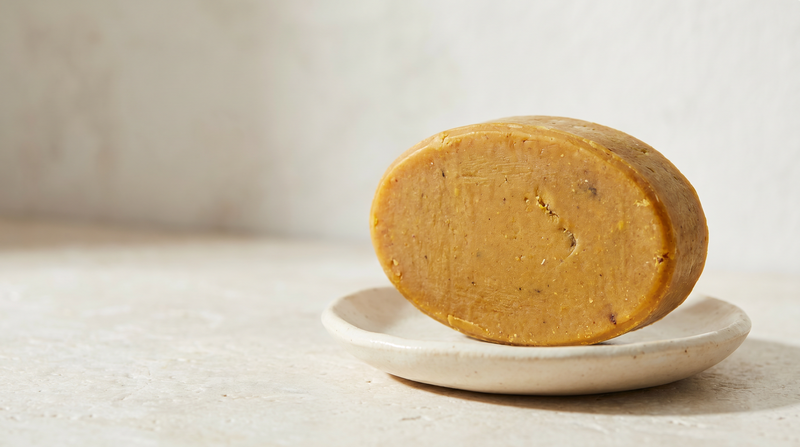
Why Kojic Acid Belongs in a Cleansing Bar, Not a Serum
Kojic acid is one of the most-studied brightening ingredients in dermatology, but it has a stability problem that most consumer skincare brands quietly ignore. Here is why the wash-off format may be the most effective way to deliver it.
Cholesterol: The Lipid Most Ceramide Creams Forget to Talk About
Ceramides have become the celebrity lipid of barrier care, but a cream that delivers ceramides without thinking about cholesterol is like building a brick wall and forgetting half the mortar. Here is what the science actually shows about the lipid trio your skin barrier is really made of.

pH and Your Cleanser: Why the Wrong Number Quietly Tanks Your Barrier
The wrong cleanser pH does not give you a rash. It works quietly, in the background, by dismantling the acid mantle and slowing the enzymes that rebuild your barrier. Here is what the science actually shows.
Squalane vs Squalene: The One-Letter Difference That Matters
Squalene oxidizes. Squalane does not. One letter separates a shelf-stable biocompatible lipid from a molecule that turns rancid within months. Why every reputable formulation uses the version with the 'a' and what that means for the face oil on your shelf.
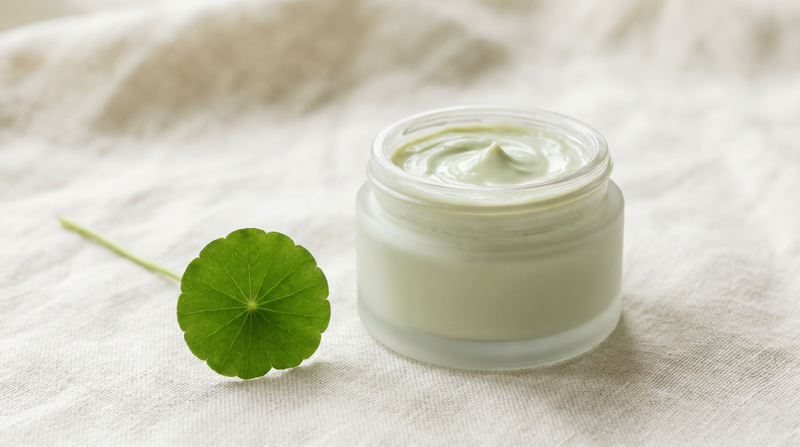
Centella Asiatica (Cica): 12,000-Year-Old Ingredient Meets Clinical Trials
Centella asiatica has 2,000 years of traditional use and a substantial modern research base. Most botanicals have one or the other. The four triterpene active compounds, what they actually do for barrier repair and collagen synthesis, and where centella fits in a serious routine.
Reducing Redness with Niacinamide: The Mechanism Behind the Calm
Niacinamide is one of the most evidence-backed anti-inflammatory ingredients in OTC skincare. The cytokine pathways it modulates, why it works for rosacea-adjacent presentations, and what to expect when you commit to clinical-dose treatment for persistent low-grade redness.
Why Eye Skin Is Different (And What That Means for Skincare)
Eye skin is structurally different from the rest of the face: thinner stratum corneum, fewer sebaceous glands, more mechanical motion, more visible vasculature. The four distinct eye-area concerns, why face cream often fails them, and what a meaningful eye cream actually contains.
The Vitamin C + E + Ferulic Stack: Why Antioxidant Synergy Matters
The vitamin C + E + ferulic acid stack is one of the most-replicated patterns in serious antioxidant skincare. The Lin study established the chemistry. Here is why the three together outperform any one alone, and the modern B3 + C + E variation that adds barrier support.
The Retinol Mistakes That Compromise Your Barrier
Most retinol failures are usage failures, not formulation failures. The five most common over-application patterns that compromise the barrier, what each one is actually doing to your skin, and the structured recovery protocol when you have already made the mistake.

How to Read a Skincare Ingredient List (Without a PhD)
The ingredient list is the most informative thing on a skincare package. INCI rules, the concentration cliffs, the hero-at-position-19 problem, and the 60-second workflow that lets you evaluate any product more accurately than the marketing describes it.
Setting Mists: What They Actually Do (Beyond Marketing)
Setting mists range from $30 of scented water to genuinely useful tools. The humectant-and-evaporation question, where mists earn their place, and what to look for on a label to tell the marketing from the chemistry.
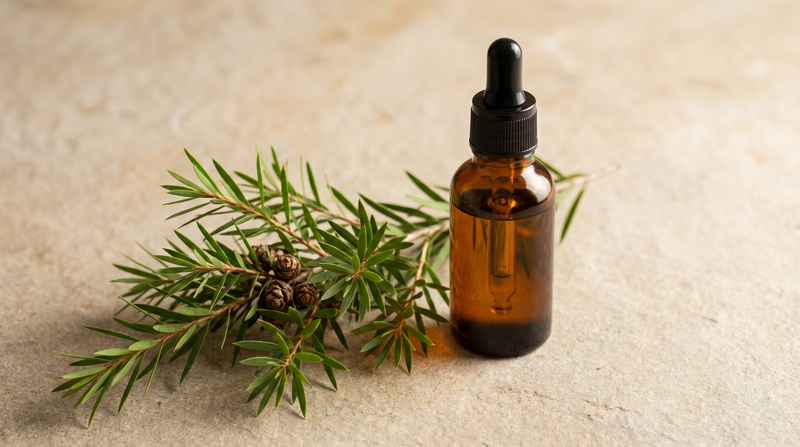
Tea Tree Oil for Breakouts: What the Studies Actually Show
Tea tree oil is one of the most-studied botanical actives in acne research. The 2007 Enshaieh trial and the 1990 Bassett head-to-head against benzoyl peroxide tell a clear story. The formulation determines whether the science actually reaches your skin.

Bisabolol: The Calming Compound You've Been Overlooking
Bisabolol is the chamomile-derived molecule in nearly every gentle moisturizer and post-procedure cream you have ever used. What the laboratory research actually shows, why it pairs so well with retinol and vitamin C, and what to look for on a label.
Allantoin: The Comfort Ingredient You've Probably Underestimated
Allantoin shows up in every barrier-repair formula worth using and almost never on the front of the box. The dual mechanism — mild keratinolytic action plus anti-inflammatory soothing — is unusual, and it makes everything else in your routine work better.
Ceramides 101: The Building Blocks of Your Skin Barrier
Ceramides are the structural lipids that hold your barrier together. Understanding them is the difference between a moisturizer that temporarily helps and one that actually repairs. How the lipid matrix works, what to look for on a label, and why retinol and ceramides belong together.
Brightening vs Whitening: What Tyrosinase Inhibitors Actually Do
Brightening and whitening are not the same thing. The melanin pathway has three intervention points, and the most effective routines hit all three. Why kojic acid alone underperforms, where niacinamide fits, and why SPF is non-negotiable.
DMAE in Skincare: What the Research Actually Shows
DMAE is divisive: cult favorite to some, marketing molecule to others. The honest read of the literature is more nuanced. What the Grossman review actually shows, and why DMAE works best in a stack with peptides and CoQ10.
Topical Antioxidants: What They Actually Do for Skin
Every brand claims antioxidants. Almost none deliver on the chemistry. Here's what topical antioxidants actually do, how to spot the real ones, and where green tea EGCG fits.
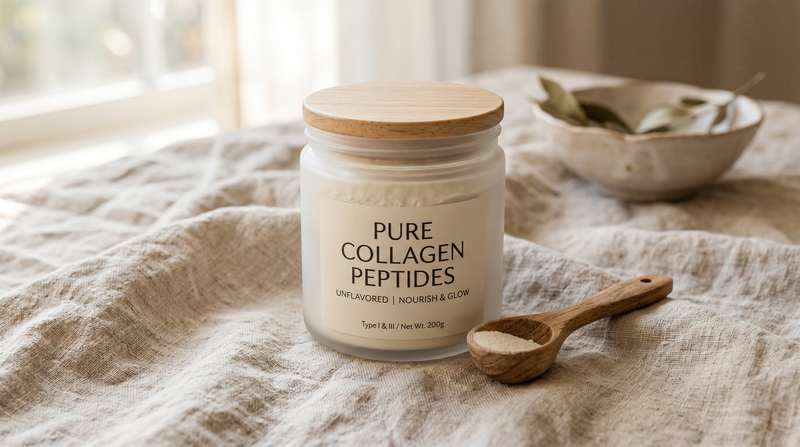
Collagen Peptides: What Oral Supplementation Actually Does for Skin
The hydrolyzed peptide → bloodstream → dermal fibroblast pathway, the trial evidence behind it, and what to look for on a label so you're not paying for marketing.
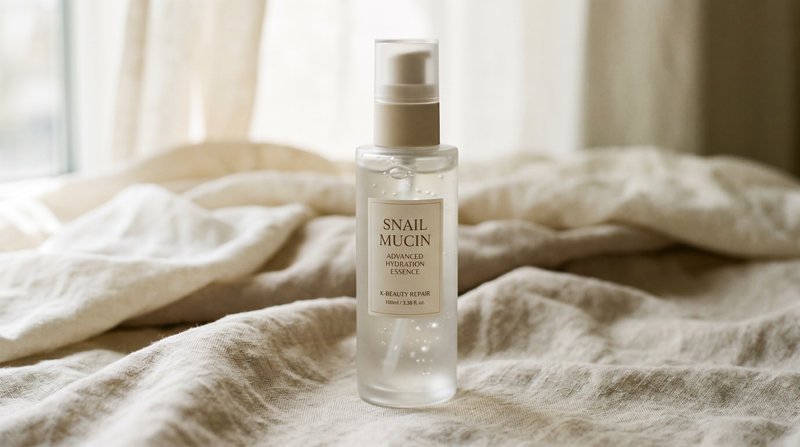
Snail Mucin: The Science Behind the K-Beauty Trend
The mechanism, the trial evidence, the cruelty-free question, and why snail mucin is one of the better-documented barrier-repair ingredients in non-pharmaceutical skincare.
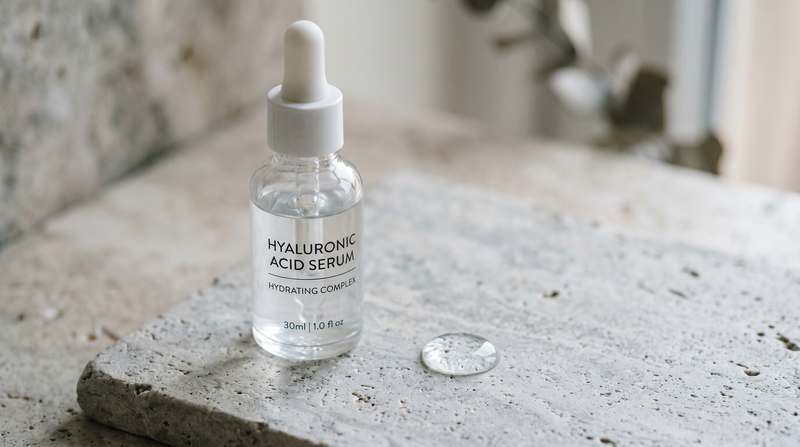
The Hydration Mistake: Why Your HA Serum Might Be Drying You Out
Hyaluronic acid is doing exactly what it does — drawing water toward itself. In a dry indoor winter, that water comes from your dermis. The fix isn't a different serum; it's a different protocol.
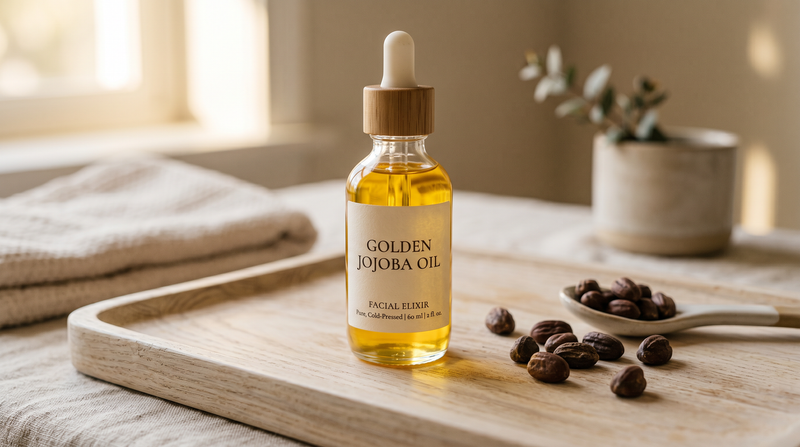
Jojoba Oil: Why It's Closer to Skin's Sebum Than Any Other Oil
The wax-ester chemistry that makes jojoba uniquely compatible with sebum — and why it doesn't trigger breakouts the way other 'natural' oils do.
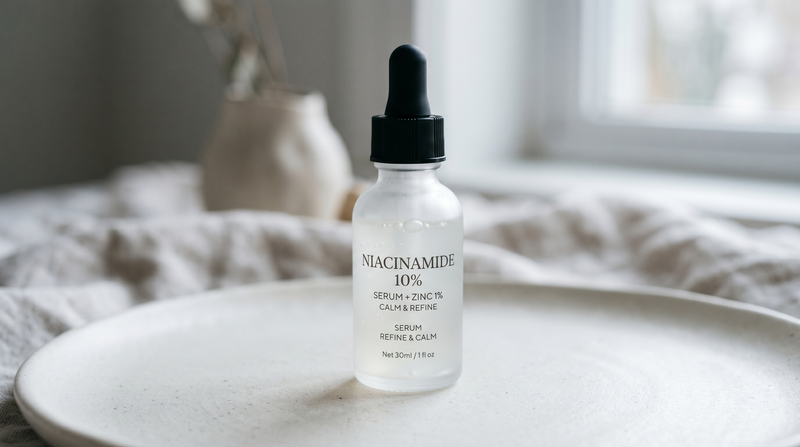
Niacinamide for Breakout-Prone Skin: The Sebum Pathway
Why niacinamide is the most underrated acne ingredient — the sebum-regulation pathway, the inflammation effect, and the post-acne mark fade.
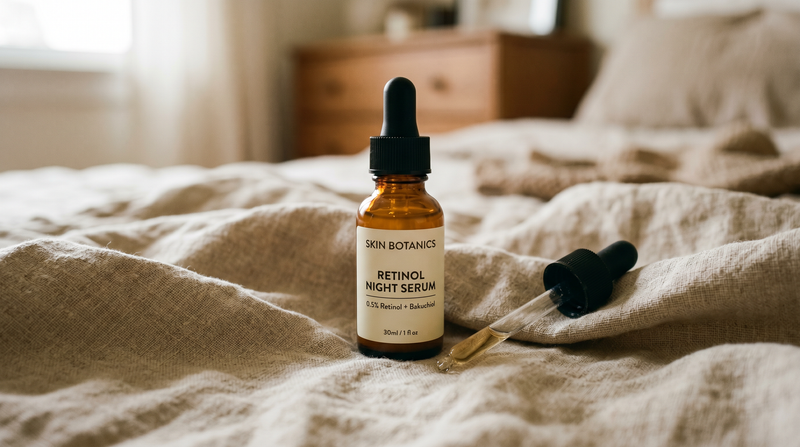
When to Start Retinol: A 12-Week Beginner's Guide
The conservative 12-week schedule that prevents the three-week dropout. What to pair retinol with, what to avoid, and how to know if it's working.
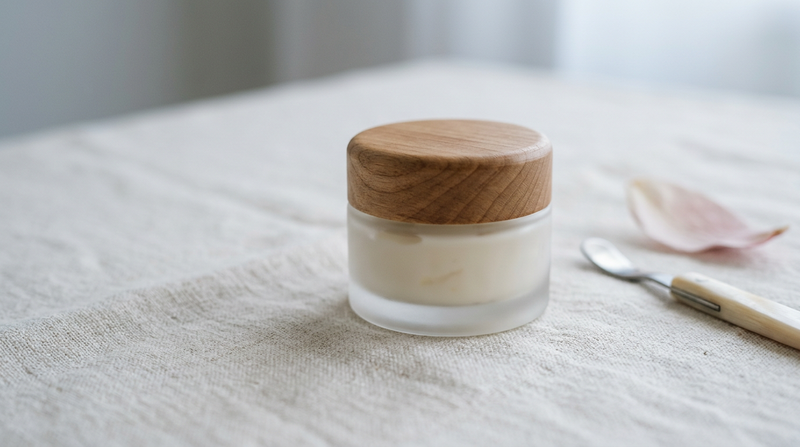
Acetyl Tetrapeptide-5 and Under-Eye Puffiness: A Peptide-Specific Look
The four mechanisms of under-eye puffiness, the peptide that actually works on the most common one, and how to tell if eye cream will help you.
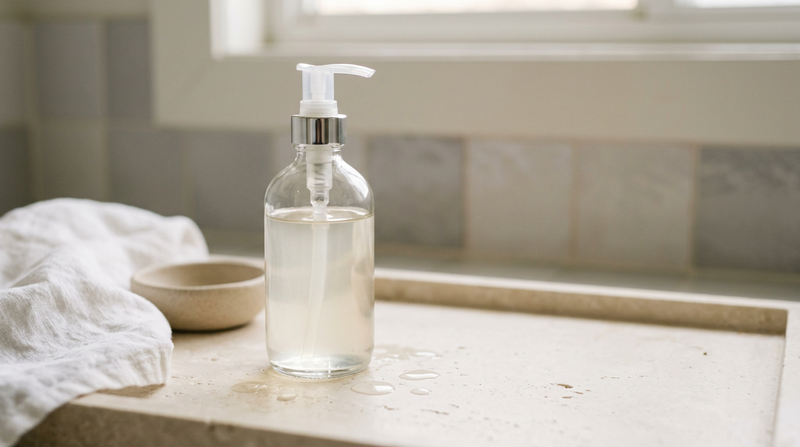
The Cleanser Mistake That Breaks Your Skin Barrier
Why tight skin after washing is barrier damage, not cleanliness — and how surfactant choice and pH determine whether your cleanser helps or hurts.
Stable Vitamin C: Why Most Vitamin C Serums Lose Potency in Weeks
Why most vitamin C serums turn brown and stop working in weeks — and what to look for on a label to find one that doesn't.
Hyaluronic Acid: Why Molecular Weight Matters
Most hyaluronic acid products use one molecular weight when the molecule actually works in a hierarchy — large weights stay on the surface, smaller weights reach deeper. Plus the application protocol that determines whether HA hydrates your skin or dehydrates it.
The 2% Niacinamide Trick: Why Most Brands Underdose
Most niacinamide products use 2%. The studies that established niacinamide's actual effects on hyperpigmentation, redness, and barrier function used 4-10%. Here's the gap between marketing concentration and clinical concentration — and how to find products that actually deliver.
Why Most Retinol Serums Cause Peeling (And What to Look For Instead)
The mechanism behind retinol's irritation is well-documented. Most products use conventional delivery that creates a surface concentration spike — the cause of flaking, redness, and the three-week 'retinization' period most people quit during. Liposomal delivery is the variable that changes this. Here's what to look for on a label, and a 12-week framework for starting retinol the right way.
What the Research Says About Fragrance in Skincare
Fragrance is the single most common cause of cosmetic contact allergy. Decades of patch test data confirm 1–4% of the general population is sensitized — and natural fragrance isn't safer than synthetic. Here's what the peer-reviewed research actually shows.
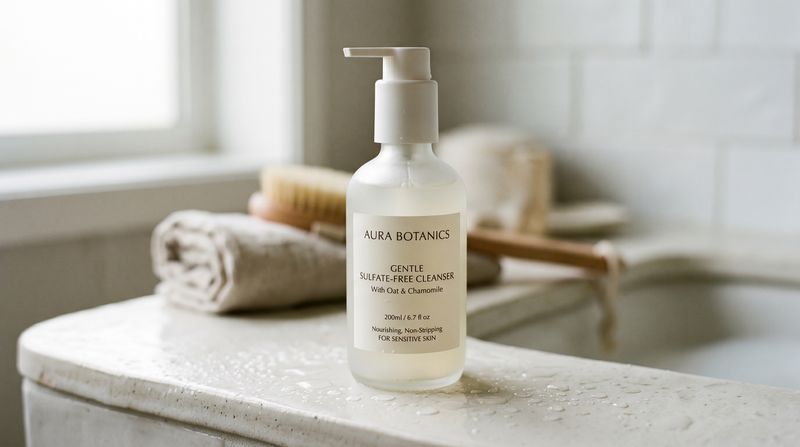
Sulfates and the Skin Barrier — What 30 Years of Research Show
Sulfates are in nearly every conventional cleanser, but the evidence is unambiguous: they directly disrupt the skin barrier's lipid matrix. Here's what 30 years of dermatology research show — and the documented physiology behind the "tight then oily" cycle most people experience after washing.
Phthalates, Endocrine Disruption, and the Labelling Gap
Phthalates are the one ingredient on this shelf you have probably never seen on a label — not because they aren't in cosmetics, but because US labelling law doesn't require disclosure. Here's what the research shows about endocrine activity, how fragrance hides them in plain sight, and where our own label lands.
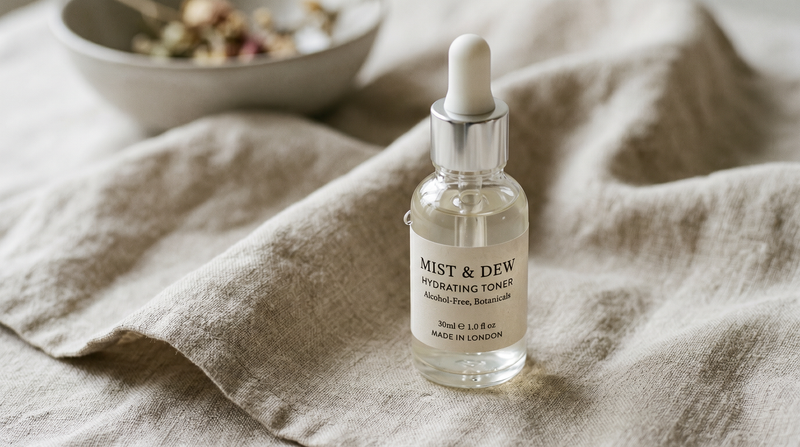
Denatured Alcohol — When the Concentration Matters
Not all alcohols in skincare are the same. Cetyl alcohol moisturizes. Denatured alcohol disrupts the barrier. Most ingredient lists don't make the difference clear — and for compromised, reactive, or easily-irritated skin the consequences are documented in decades of clinical research.
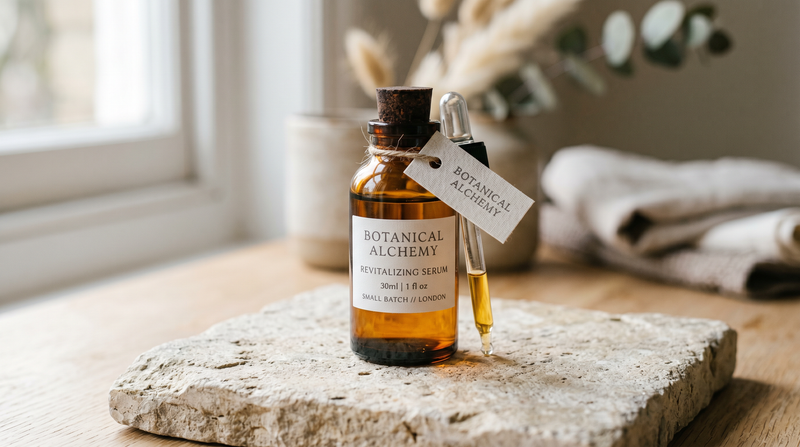
Parabens in Skincare — What the Evidence Actually Shows
The famous Darbre 2004 study put parabens on the map and shaped clean beauty marketing for twenty years. But the actual finding was more careful than the headlines suggested. Here's what the research clearly shows, what it doesn't, and why precision matters more than slogans.

Silicones in Skincare — The Environmental Case
Most "silicones are bad for skin" content online overstates the case. The dermatology evidence is mixed at best. The environmental persistence evidence is much stronger. Here's the honest version — including where our own label lands, and the one formula of ours that contains them.
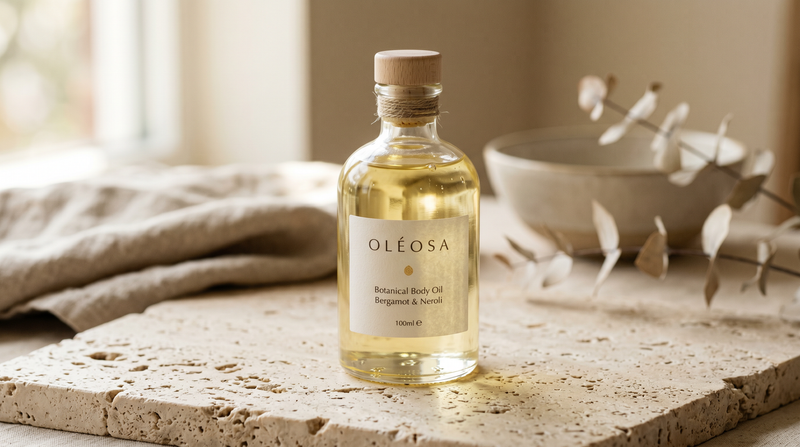
Mineral Oil in Skincare — The Functional Case
Mineral oil is the one ingredient on this shelf whose case isn't about safety. At cosmetic grades, it isn't toxic. The argument is functional: mineral oil seals water in but doesn't help your skin retain water on its own. Here's what plant oils do that mineral oil can't — and where our own label lands.