

Short answer: Oily and dehydrated are not opposites. Oily describes how much oil your skin makes; dehydrated describes how little water it holds — and any skin type, including oily, can be low on water. The usual cause is harsh, over-stripping cleansing that damages the barrier and lets water escape, so skin looks shiny on the surface but feels tight underneath. The fix is not to strip harder. It is to cleanse gently, add water-based hydration, and seal it with a light layer.
Oily and dehydrated are two different things
Oil and water are not the same, and your skin can be short on one while flush with the other.
Oily skin produces a lot of sebum, the skin's own oil. That is largely set by genetics and hormones. Dehydrated skin is low on water — and unlike a skin type, it is a temporary condition that any skin can fall into, oily skin included. So shiny skin that also feels tight, looks dull, or shows fine surface lines is usually oily on top and dehydrated underneath.
Why stripping it backfires
The instinct is to fight oil with strong, foaming cleansers and mattifying products. That tends to make things worse.
Cleanser surfactants lift away oil, but they also strip the barrier's own lipids, and that lipid loss is what leaves skin tight and dry after washing (Ananthapadmanabhan, International Journal of Cosmetic Science, 2013). A weakened barrier loses water faster, which is the dehydration you feel.
You will often read that stripping your skin makes it “produce more oil.” The truth is more measured: sebum output is mostly driven by hormones, not by how hard you wash, so the evidence for a true oil rebound is mixed. What is clear is that over-stripping damages the barrier and worsens dehydration — and dehydrated skin that feels tight and looks shiny is what sends most people reaching for even harsher products. That is the cycle worth breaking.
How to fix it
The goal is balance, not removal.
Cleanse gently. A non-stripping cleanser leaves the barrier intact so skin is clean, not tight.
Add water, not just oil control. Humectants like hyaluronic acid and glycerin draw water into the skin without heaviness (Bravo et al., Dermatologic Therapy, 2022). This is the step most oily-skinned people skip.
Seal it lightly. A light moisturizer holds that water in. Skipping moisturizer to “stay matte” usually leaves skin more dehydrated, not less.
Support the barrier. Niacinamide helps regulate oil while strengthening the barrier (Tempark et al., Journal of Cosmetic Dermatology, 2024), which is a gentler path to less shine than stripping.
This is part of why our routine looks the way it does
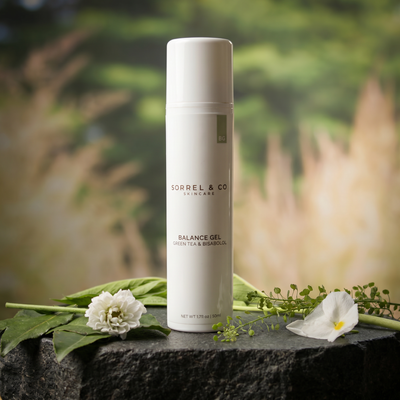
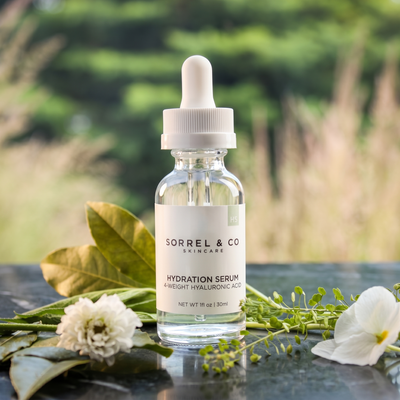
Oily, dehydrated skin is exactly what we had in mind with the Balance Gel — light rather than mattifying, with green tea and bisabolol to calm rather than strip. We would pair it with the Hydration Serum for the water the skin is actually missing, over a non-stripping Daily Cleanser. The point is to give oily skin water and a calm barrier, not to scrub it dry and start the cycle over.
Frequently asked questions
Can oily skin be dehydrated?
Yes. Oily skin produces plenty of sebum but can still be short on water, especially after harsh cleansing or in dry air. Shiny but tight skin is the usual sign.
What is the difference between dry and dehydrated skin?
Dry skin lacks oil and is a long-term skin type. Dehydrated skin lacks water and is a temporary condition that any skin type can experience.
Does oily skin need moisturizer?
Yes. Skipping moisturizer tends to leave skin more dehydrated, and dehydrated skin often looks oilier. A light moisturizer holds water in without heaviness.
Will washing more reduce my oil?
No. Over-washing strips the barrier and worsens dehydration. Sebum output is mostly hormonal, so harsher cleansing mainly damages the barrier rather than fixing the oil.
What ingredients help oily, dehydrated skin?
Gentle cleansers, humectants like hyaluronic acid and glycerin, a light moisturizer to seal, and niacinamide to support the barrier and oil balance.
The takeaway
Oily and dehydrated skin needs water, not war. Cleanse gently, hydrate with humectants, seal with something light, and stop stripping. The shine that comes with tightness is a sign of too little water, not too little washing.
— SORREL & CO · sorrel.skin
References
- Ananthapadmanabhan KP, et al. Stratum corneum fatty acids: their critical role in preserving barrier integrity during cleansing. International Journal of Cosmetic Science. 2013. https://onlinelibrary.wiley.com/doi/10.1111/ics.12042
- Bravo B, et al. Benefits of topical hyaluronic acid for skin quality. Dermatologic Therapy. 2022. https://onlinelibrary.wiley.com/doi/10.1111/dth.15903
- Tempark T, et al. Ceramide and niacinamide-containing moisturizer in acne care. Journal of Cosmetic Dermatology. 2024. https://onlinelibrary.wiley.com/doi/10.1111/jocd.16212