Somewhere on every Sorrel product page, under each key ingredient, you’ll find a small label: Strongest evidence. Strong evidence. Mixed evidence.
That third one surprises people. Brands don’t usually volunteer that the science behind one of their own ingredients is unsettled. The reflex in this industry is to describe everything in a bottle as clinically proven, and to hope nobody asks: proven by whom, in how many people, against what?
We built the tiers because the honest answer to those questions is different for different ingredients — and because you can’t read labels intelligently until someone tells you how the grading works. So this article is the missing manual: what each tier means on our pages, why an ingredient lands where it does, and how to apply the same three-level test to any product on your shelf, whether we made it or not.
Why evidence comes in levels at all
Skincare research is real science with a real hierarchy. At the top sit randomized controlled trials on human faces — two groups, one gets the ingredient, one gets the same formula without it, and neither the participants nor the people measuring know who got what. Below that: smaller human studies without perfect controls, then ex vivo work on donated skin samples, then in vitro results from cells in a dish, and at the bottom, mechanistic reasoning — “this molecule should work because of what it does chemically.”
Every level is legitimate research. The problem is that marketing flattens the hierarchy. “Clinically proven” can describe a 200-person randomized trial or a 12-person study run by the manufacturer with no control group. “Backed by science” can mean decades of dermatology literature or one cell-culture experiment. The words on the front of the box do not tell you which — and legally, they don’t have to.
What each tier means on a Sorrel page
Strongest means multiple independent human trials point the same direction, at concentrations comparable to what’s in the bottle. Retinol’s effect on the look of fine lines is the textbook case — the trial literature spans decades, the findings replicate across research groups, and the effective concentration range is well mapped (the Randhawa 2015 trial on our research page is one of many). Niacinamide at 4–5% and up sits here too, with the Hakozaki 2002 work on the look of uneven tone among the most-cited results in cosmetic dermatology.
Strong means good human evidence exists — the effect is real and established — but with a caveat we think you deserve to know: fewer or smaller studies, or results measured at concentrations that not every formula matches. Many peptides live here. So does centella asiatica — promising human trials, a long traditional-use history, but a thinner replication record than the strongest tier demands.
Mixed means the research genuinely disagrees, or the best-known result is a single study nobody has convincingly repeated. DMAE is our standing example: the paper everyone cites is real, its findings are interesting, and it is largely alone. We select mixed-tier ingredients when the mechanism is sound and they pair well with stronger actives — but we will not print “proven” over an ingredient the literature is still arguing about.
What the industry does instead
Notice what the tiers make impossible: the word “miracle.” A grading system forces every claim to sit next to its receipts. That’s precisely why grading systems are rare in this industry — a brand that ranks its own evidence gives up the ability to imply that everything it sells is equally magical.
The more common approach is selective citation: run one favorable study, cite it forever, and let “studies show” do the rest. Or the concentration dodge — cite research performed at 10% while formulating at 2%, because the ingredient list doesn’t have to disclose the number. None of this is illegal. All of it depends on you not asking which tier the evidence belongs to.
How to tier any product yourself
You don’t need a database subscription. Three questions sort most claims in about a minute:
1. Human faces, or cells in a dish? Search the ingredient plus “randomized” or “clinical trial.” If everything you find is in vitro, you’re looking at mechanistic promise, not demonstrated results — a legitimate reason for interest, not for the price premium.
2. Does the concentration match? If the famous study used 5% and the product won’t say what it contains, assume it’s less. Brands that hit clinical concentrations say so, loudly, because it costs them more.
3. Who paid, and who repeated it? A manufacturer-funded study isn’t automatically wrong — most cosmetic research is industry-funded — but an independent replication is worth five sponsored originals. One study is a data point. A literature is a tier.
Where the tiers live on our pages
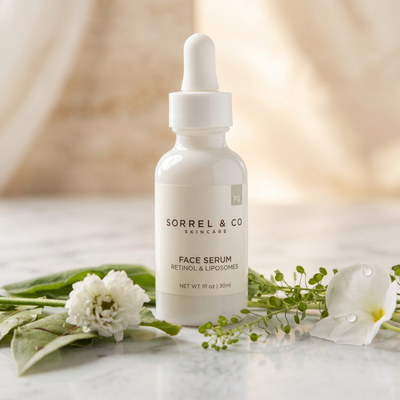
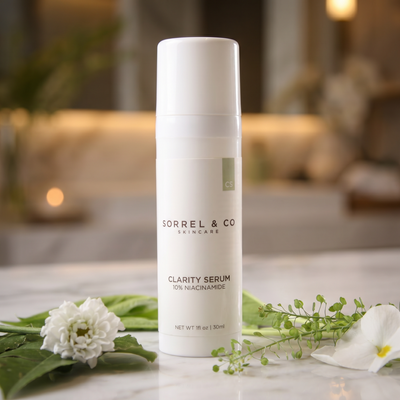
Open any product — the Face Serum or the Clarity Serum are good examples — and each key active carries its tier, its concentration where it matters, and a link to the studies behind the grade on our research page. The tier is assigned to the ingredient at the concentration we use, not to the ingredient in the abstract, because a strongest-tier active at a token dose isn’t strongest-tier anything.
When the evidence moves, the tier moves. That’s the deal: the grade tracks the literature, not the marketing calendar.
Using the tiers in practice
Spend on strongest-tier actives first — they’re the ones with the best odds of visible change for your money. Let strong-tier ingredients be the supporting cast you’re pleased to have rather than the reason you bought the product. Treat mixed-tier ingredients as a bonus experiment, never a promise. And when any brand — ours included — puts a claim in front of you, ask which tier it would earn if it had to wear one.
That single habit changes how you shop more than any ingredient ever will.
If you’d rather have the evidence sorted for your actual skin instead of in the abstract, the Skin Plan takes thirty seconds, asks for no email, and builds your routine from the strongest-tier ingredients your skin can use most.