Most skincare buying decisions are made from the front of the package. The front says “hydrating,” or “brightening,” or “anti-aging,” or some variation, and the back is read briefly to confirm the claim or skipped entirely. This is exactly the wrong way to evaluate a skincare product.
The ingredient list — the small-type alphabetical or descending-order list usually on the back of the box — is the single most informative thing on the package. It is also regulated, so brands have to be honest about what is in there even when they would prefer not to be. Once you know how to read it, you can evaluate a product more accurately in 60 seconds than the entire marketing department can describe it in. Here is how.
What INCI is and why it matters
INCI — the International Nomenclature of Cosmetic Ingredients — is the standardized naming system used on cosmetic product labels around the world. The reason it matters: under most cosmetic regulations (FDA in the US, the EU Cosmetics Regulation, similar frameworks elsewhere), ingredients must be listed using INCI names, in descending order by weight, down to roughly 1% concentration. Below 1%, ingredients can be listed in any order.
This rule is the foundation of label literacy. The first ingredient is the most-concentrated. The fifth ingredient is meaningfully less concentrated than the first. The fifteenth ingredient is typically present at well under 1%. The position of an ingredient tells you something real about how much of it is actually in the product.
The exception: below 1%, the order is voluntary, which means a brand can list a token amount of a marketed ingredient ("with retinol") higher up than its concentration would justify, provided the entire below-1% block stays internally unranked. This is the basis of the “hero ingredient at position 19” problem we will get to in a moment.
The concentration cliffs
Three rough thresholds matter when reading an ingredient list:
Position 1–3. These ingredients are the structural base of the formulation. Almost always water, glycerin, butylene glycol, alcohol denat (in some categories), an oil base, or an emulsifier. They define what kind of product this is more than what it specifically does.
Position 4–10. The work-horse range. This is where active ingredients and meaningful supporting ingredients appear in well-formulated products. If a brand markets a product around niacinamide and niacinamide appears at position 6, the product probably contains clinical-dose niacinamide. If niacinamide appears at position 18, it is below 1% and the marketing is doing the work the chemistry is not.
Position 11 and below. Typically the under-1% block. Ingredients here are usually preservatives, fragrance, chelating agents, pH adjusters, and token amounts of marketed actives. There are exceptions — some active ingredients work at concentrations well below 1% (potent peptides, certain fragrant essential oils, retinol itself) — but the default assumption is that ingredients in this position are present at minimal concentration.
The hero ingredient at position 19
The most common label-reading mistake is to scan an ingredient list for the marketed hero ingredient, find it, and treat that as confirmation of the marketing claim. The mistake: presence does not mean concentration. Position does.
Consider a moisturizer marketed as “packed with vitamin C.” If you scan the ingredient list and find ascorbic acid at position 22, somewhere between a chelating agent and a fragrance compound, the product contains vitamin C at well under 1%. The studies establishing vitamin C's efficacy on skin use concentrations of 10–20%. The product is technically not lying. It is also not delivering anything close to the studied effect.
This pattern repeats across dozens of marketed actives. Retinol products that list retinol at position 18. Hyaluronic acid serums that list sodium hyaluronate at position 14. Vitamin C creams with ascorbic acid at position 21. The marketing claim is true — the ingredient is present. The therapeutic claim is false — the concentration is nowhere near studied levels.
The defense: scan the ingredient list for the hero ingredient and note its position. If it is anywhere in the under-1% block (position 10–15 or below in most formulations), the product is almost certainly under-dosed.
The supporting cast rule
A serious formulation contains more than one work-horse ingredient. A retinol product paired with ceramides, niacinamide, and panthenol tells you the formulator was thinking about the user's barrier as well as the active's effect. A retinol product with just retinol and a base oil tells you the formulator was thinking about the marketing.
The supporting cast indicators worth looking for:
- Soothing ingredients. Allantoin, panthenol, bisabolol, centella asiatica. These mitigate the irritation profile of more aggressive actives. We covered the broader case in our pieces on allantoin's dual mechanism and why bisabolol earns its place.
- Barrier lipids. Ceramides, cholesterol, fatty acids, squalane. These rebuild the lipid matrix the actives are operating on. We covered ceramides specifically in our ceramides 101 piece.
- Antioxidants. Vitamin E (tocopherol or tocopheryl acetate), green tea polyphenols, ferulic acid. Stabilize the formulation and add a layer of protection.
- Humectants. Glycerin, sodium hyaluronate, sodium PCA, panthenol. Provide the hydration substrate.
A product with one or two of these in the top 10 is doing real work. A product with none of these is unlikely to feel good on the skin or to produce the outcome the marketing implies.
Fragrance and preservative red flags
Two ingredient categories deserve specific attention because they cause more reactions than any others.
Fragrance. Listed as “fragrance,” “parfum,” or individual fragrance compounds (linalool, limonene, geraniol, eugenol, citronellol — dozens of common allergens). Fragrance is the #1 contact sensitizer in cosmetic chemistry. Even people without known fragrance allergies often experience low-grade irritation from fragranced products without identifying the cause. We covered the evidence in detail in our piece on what the research says about fragrance in skincare.
The defense: prefer fragrance-free products in any category where fragrance does not serve a functional role. Cleansers, moisturizers, serums, and treatments do not need to smell like anything. Pleasant natural scent from botanical extracts (rose water, chamomile, etc.) is different from added “fragrance” — the former is incidental, the latter is the product.
Aggressive preservatives. Some preservatives carry meaningful sensitization potential at the concentrations used in cosmetics: methylisothiazolinone, methylchloroisothiazolinone, formaldehyde-releasing preservatives (DMDM hydantoin, imidazolidinyl urea, quaternium-15). These are not banned in most jurisdictions but should prompt closer attention if you have reactive skin.
The defense: look for gentler preservative systems — phenoxyethanol with caprylyl glycol, sorbic acid, benzyl alcohol, or modern systems like Geogard ECT and Naticide. These have significantly better safety profiles for sensitive skin.
What “clean,” “natural,” and “non-toxic” mean
Almost nothing. These terms are not regulated by the FDA or by most other cosmetic regulatory bodies. A brand can label essentially any formulation as “clean,” “natural,” or “non-toxic” without meeting any objective standard.
What does mean something:
- EWG Verified. A third-party certification with specific criteria around ingredient avoidance and disclosure. Imperfect but not meaningless.
- COSMOS Organic / COSMOS Natural. European certification with rigorous standards for organic and natural cosmetics.
- USDA Organic. US certification for products meeting organic agricultural standards. Stringent but limited in scope (mostly applies to single-ingredient products or simple blends).
- Leaping Bunny. Cruelty-free certification with audited supply chains. Does not address ingredient profile but is meaningful within its scope.
The four certifications above mean something. The word “clean” on a label means nothing absent one of them.
The 60-second ingredient check
A practical workflow for evaluating any skincare product:
- Find the hero ingredient. What is the product marketed around? Note its INCI name (vitamin C = ascorbic acid or sodium ascorbyl phosphate, retinol = retinol or retinyl palmitate, etc.).
- Find that ingredient on the ingredient list. Note its position. Top 10 is encouraging. Position 15 or below is a red flag.
- Scan the top 10 ingredients for the supporting cast. Any soothing ingredients? Any barrier lipids? Any humectants? Any antioxidants?
- Scan for fragrance. “Fragrance,” “parfum,” or individual fragrance compounds. Position matters less here — any presence is a flag for sensitive skin.
- Note the preservative system. Phenoxyethanol-based is usually fine. Isothiazolinones or formaldehyde-releasers warrant caution.
- Cross-reference with the marketing. Does the ingredient list support the front-of-package claim? Or is the claim doing work the formulation cannot?
Sixty seconds. Maybe ninety if you are new to the workflow. By the third or fourth product, the patterns become obvious — some brands consistently formulate to the marketing, some consistently formulate to the science, and the ingredient list tells you which is which.
What this looks like in practice
The most useful test: take a product you currently use and read its ingredient list against the workflow above. If the hero ingredient is in the top 10 and the supporting cast is sensible, the product is probably doing what the marketing implies. If the hero ingredient is at position 22 and the top 10 is mostly base ingredients plus fragrance, the marketing is doing the work the chemistry is not.
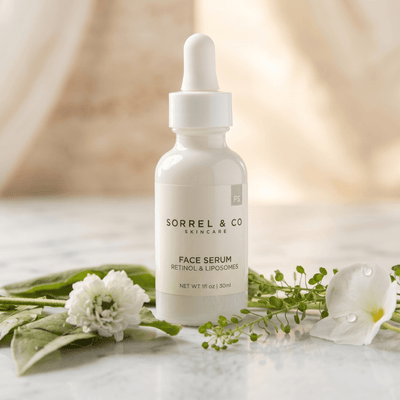
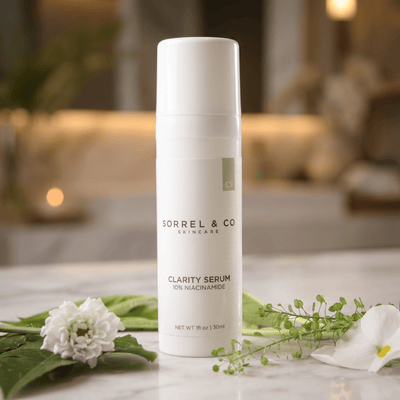
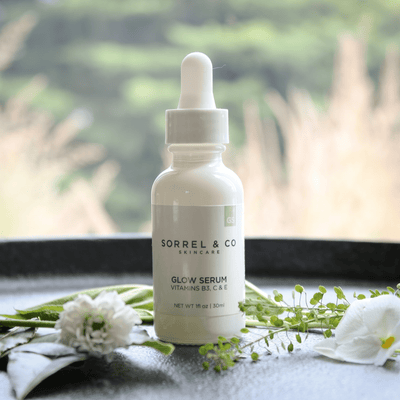
This is also the test we apply to our own formulations. Every Sorrel product lists its hero actives in positions where the concentration is meaningful, pairs them with a supporting cast that earns its place, and avoids the fragrance-and-aggressive-preservative trap. The full ingredient lists with concentrations where relevant are linked from our Research page.
Skincare is a category where consumer literacy is the single biggest correction to marketing excess. Most expensive products are not better than less-expensive ones. Most products with longer ingredient lists are not better than ones with shorter ones. The variables that actually predict outcome are the position and concentration of the hero ingredient, the quality of the supporting cast, and whether the formulation is built around delivery to skin or around delivery to marketing.
Sixty seconds with the ingredient list answers most of those questions. The rest is just consistency over time.