

Short answer: Your skin barrier is the outermost layer that keeps water in and irritants out. When it is damaged — most often from over-washing, over-exfoliating, or harsh, fragranced products — skin feels tight, stings, flakes, or turns red. You repair it mostly by doing less: a gentle, non-stripping cleanser, a moisturizer built from the same lipids skin uses (ceramides, cholesterol, fatty acids), no fragrance, and time. Stop what is damaging it, and the barrier rebuilds itself over a few weeks.
What the skin barrier actually is
Picture a brick wall. The outer layer of your skin — the stratum corneum — is built like one: skin cells are the bricks, and a matrix of lipids is the mortar holding them together. That mortar is made mostly of three things in roughly equal measure: ceramides, cholesterol, and free fatty acids (Schild, International Journal of Cosmetic Science, 2024).
When the mortar is intact, it does two jobs at once: it keeps water from escaping, and it keeps irritants from getting in. When it is depleted, both jobs fail — water leaves, irritation enters, and skin starts to complain.
How to tell your barrier is damaged
The signs are consistent. Skin feels tight after cleansing. It stings or burns when you apply products that used to be fine. It flakes or looks dull. It flushes easily. Often the giveaway is that something you have used for months suddenly starts to react — the product did not change, your barrier did.
What damages it
Most barrier damage is self-inflicted, and usually with good intentions.
Over-washing and harsh cleansers. Cleansing is the most common culprit. Surfactants, the ingredients that make a cleanser foam, lift away oil and grime — but they also strip out the skin's own barrier lipids, and that lipid loss is what leaves skin dry and tight after washing (Ananthapadmanabhan, International Journal of Cosmetic Science, 2013).
Over-exfoliating. Acids and scrubs used too often wear the wall down faster than it can rebuild.
Fragrance and too many actives. Fragrance is the single most common cause of allergic contact dermatitis from cosmetics (Scheinman, American Journal of Contact Dermatitis, 1996). Stacking several strong actives at once compounds the stress.
How to repair it
The repair is less about adding and more about stopping.
Do less. Pause exfoliants and strong actives, including retinol, while the barrier is actively healing. Pare back to a short routine.
Cleanse gently. Switch to a non-stripping cleanser so you stop removing the lipids you are trying to rebuild.
Replenish the mortar. This is where the right moisturizer matters. The barrier is rebuilt from ceramides, cholesterol, and fatty acids, and studies show that applying these lipids — and ceramides in particular — helps restore the barrier and reduce the signs of dry skin (physiological lipid mixtures, Journal of Investigative Dermatology; ceramide cream raises skin lipid levels, JDD, 2020). Niacinamide helps from a different angle, supporting the skin's own ceramide production (cosmetic.science review). And calming botanicals like centella can strengthen the barrier while soothing redness in sensitive skin (Su, Journal of Cosmetic Dermatology, 2025).
Give it time. A barrier does not rebuild overnight. Most skin settles over two to four weeks of gentler treatment.
This is part of why our routine looks the way it does
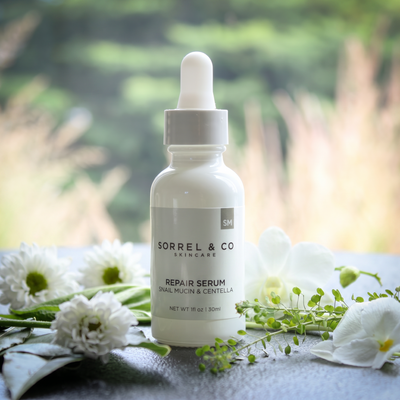
A damaged barrier is the reason we built the line the way we did. It is why the Daily Cleanser is non-stripping rather than squeaky. It is why the Repair Serum leans on centella to calm and support. It is why ceramides anchor the Renewal Cream for once your skin is calm again — though if your barrier is actively damaged, ease off its retinol until things settle. And it is why the products built for a compromised barrier — the Daily Cleanser and the Repair Serum — are fragrance-free. A few richer products in the range do carry fragrance or citrus oils, and we say so on their labels; those are for skin that has already calmed, not for a barrier in crisis. The point of the routine is to stop fighting your skin so it can do what it already knows how to do.
Frequently asked questions
How long does it take to repair a skin barrier?
Most skin improves over two to four weeks of gentler treatment, though deeper damage can take longer. Consistency matters more than any single product.
How do I know if my barrier is damaged?
Common signs are tightness after cleansing, stinging from products that used to be fine, flaking, dullness, and easy redness.
What ingredients repair the skin barrier?
The lipids skin is built from — ceramides, cholesterol, and fatty acids — plus supportive ingredients like niacinamide and calming botanicals such as centella. Gentle, fragrance-free formulas help most.
Can over-washing damage your skin?
Yes. Cleanser surfactants strip the barrier's own lipids along with oil, which is why skin can feel tight and dry after washing. A non-stripping cleanser reduces this.
Should I stop using actives if my barrier is damaged?
Usually, yes — pause exfoliants and retinol while the barrier heals, then reintroduce them slowly once skin is calm.
The takeaway
A damaged barrier is rarely fixed by adding more. Wash gently, replace the lipids skin is built from, drop the fragrance and the extra actives, and give it a few weeks. The wall rebuilds itself when you stop knocking it down.
This article is educational and not medical advice. If your skin is persistently irritated, see a dermatologist.
— SORREL & CO · sorrel.skin