

Short answer: You do not need to bleach your skin to fade dark spots. The word "bleaching" suggests stripping color out of skin, but the ingredients that actually work do something different — they slow the over-production of pigment and help the skin shed what it has already made. The result looks like even tone returning, not skin lightened past its natural color. It is slower than bleaching sounds, and that is the point.
Why "bleaching" is the wrong mental model
Dark spots are areas where the skin made too much melanin, usually after sun exposure, inflammation, or a breakout. The pigment sits at different depths, and how deep it is largely determines how long it takes to fade (Davis and Callender, 2010). Fading them is not about removing color from healthy skin — it is about bringing an overactive patch back in line with everything around it.
How the gentle approach actually works
Two levers, neither of which bleaches.
Make less new pigment. Tyrosinase is the enzyme that drives melanin production, and several well-studied ingredients slow it down. Niacinamide takes a slightly different route, interrupting the transfer of pigment from the cells that make it to the surface skin cells (Hakozaki et al., 2002). Kojic acid is a direct tyrosinase inhibitor (kojic acid review).
Turn over what is already there. Gentle resurfacing and steady cell turnover help the skin shed pigment it has already deposited. This is the slow half, and it cannot be rushed without irritating the skin — which, ironically, can trigger more pigment.
Why patience beats aggression
The fastest-sounding routes — harsh acids, high-strength actives, aggressive devices — carry a specific risk for spot-prone skin: inflammation itself causes pigment. Push too hard and you can darken the very spots you are trying to fade. Gentle, consistent, sun-protected effort wins because it does not keep re-triggering the problem. We go deeper on the timeline in why dark spots take so long to fade.
The one non-negotiable
Daily sun protection is the part that makes everything else work. Without it, new sun exposure keeps re-stimulating pigment faster than any active can fade it. It is the least glamorous step and the most important.
How we think about it
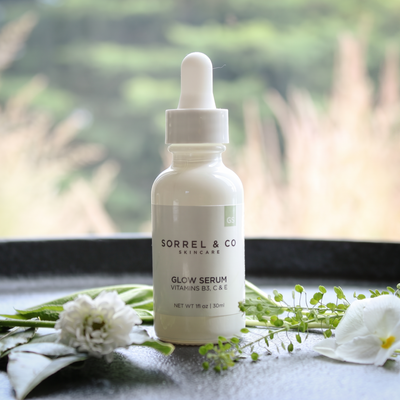
Our approach to uneven tone leans on niacinamide and gentle brightening rather than anything harsh — the logic behind the Glow Serum and the cleanser-step approach of the Brightening Bar. The aim is even-looking tone, restored gradually.
Frequently asked questions
Do I need hydroquinone or bleaching cream to fade dark spots?
No. Ingredients like niacinamide, kojic acid, and gentle resurfacing work by slowing pigment production and turnover, not by bleaching skin.
Will brightening ingredients lighten my whole face?
They act on overactive, over-pigmented areas to bring them back in line with surrounding skin rather than lightening skin past its natural tone.
How long does it take?
Usually weeks to months, depending on how deep the pigment sits. Surface spots fade faster than deeper ones.
What is the single most important step?
Daily sun protection. Without it, new exposure keeps re-triggering the pigment you are trying to fade.
The takeaway
Fading dark spots is about calming overactive pigment and protecting from the sun, not bleaching skin. Gentle and consistent beats harsh and fast. To build a routine around uneven tone, start with your skin concern.
— SORREL & CO · sorrel.skin
References
- Davis EC, Callender VD. Postinflammatory hyperpigmentation: a review. 2010. https://pubmed.ncbi.nlm.nih.gov/21348540/
- Hakozaki T, et al. The effect of niacinamide on reducing cutaneous pigmentation and suppression of melanosome transfer. British Journal of Dermatology. 2002. https://onlinelibrary.wiley.com/doi/abs/10.1046/j.1365-2133.2002.04834.x
- Kojic acid as a tyrosinase inhibitor: review. https://www.ncbi.nlm.nih.gov/pmc/articles/PMC5057104/