

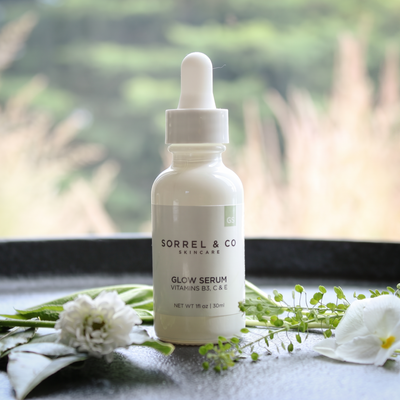
The vitamin C plus vitamin E plus ferulic acid stack is one of the most-replicated formulation patterns in serious antioxidant skincare. It appears in luxury products, in mid-priced products, in dermatologist-formulated lines, and in pharmacy brands. It is rarely the centerpiece of the marketing because the explanation is technical, but it is consistently the formulation pattern used when a brand is trying to deliver maximum photoprotection from a topical antioxidant serum.
The reason is one study, and a small library of follow-up research. The chemistry is real, the synergy is measurable, and the resulting stack outperforms any of its three ingredients used alone. Here is what the foundational research shows, why the three ingredients together are more than the sum of their parts, and how to evaluate vitamin C serums against the standard the research establishes.
The Lin 2003 study
The reference paper is Lin et al., “Ferulic acid stabilizes a solution of vitamins C and E and doubles its photoprotection of skin,” published in the Journal of Investigative Dermatology in 2005 (despite the common “Lin 2003” shorthand for the research line). The study tested a combination of 15% L-ascorbic acid, 1% alpha-tocopherol (vitamin E), and 0.5% ferulic acid on human skin, comparing it to vehicle control and to versions of the formulation missing one of the three ingredients.
The key findings: the three-ingredient combination produced approximately 8-fold photoprotection against UV-induced erythema, compared to 4-fold for vitamin C plus vitamin E alone, and substantially less for any single ingredient. The ferulic acid addition also significantly improved the chemical stability of the vitamin C in the formulation, slowing the oxidation problem that limits the shelf life of L-ascorbic acid serums.
The mechanism is two-part. Photoprotection is enhanced because each antioxidant intervenes at a different point in the free-radical cascade triggered by UV exposure. Stability is improved because ferulic acid donates electrons to oxidized vitamin C, regenerating its active form before it can degrade into inactive byproducts.
Why the three ingredients are more than the sum of their parts
The synergy is not a marketing word in this case. It is a measurable, mechanistic effect with clear chemistry behind it.
Vitamin C (ascorbic acid) is a water-soluble antioxidant. It works in the aqueous phase of skin tissue — the interior of cells and the spaces between them where water-soluble damage occurs. It is also a cofactor for collagen synthesis, which is a separate benefit beyond pure antioxidant activity.
Vitamin E (alpha-tocopherol) is a lipid-soluble antioxidant. It works in the lipid phase — cell membranes, the lipid matrix of the stratum corneum, and the bilayer structures that surround organelles. Free radical damage attacks both aqueous and lipid components of cells. A single antioxidant can only protect one phase. Pairing them addresses both.
Ferulic acid is a plant-derived phenolic antioxidant with an unusual property: it can regenerate oxidized forms of both vitamin C and vitamin E by donating electrons to them. This regeneration cycle extends the working life of the other two antioxidants. A formulation with ferulic acid stays active longer on the skin than the same vitamins C and E without it.
The three together create a three-phase protection: water-phase antioxidant activity from vitamin C, lipid-phase activity from vitamin E, and the regenerative cycle from ferulic acid that keeps the other two operational rather than spent. This is the chemistry behind the 8-fold photoprotection number.
The B3 + C + E variation
A common modern variation on the original L-ascorbic acid + tocopherol + ferulic stack uses niacinamide (vitamin B3) as the fourth ingredient or sometimes as a partial substitute for ferulic acid. The rationale: niacinamide adds anti-inflammatory and barrier-supportive activity that the original stack does not address, and niacinamide pairs well with vitamin C despite older claims to the contrary.
The older “you cannot mix vitamin C and niacinamide” advice came from a misinterpretation of 1960s research using high-temperature laboratory conditions that converted vitamin C and niacinamide into nicotinic acid — a different compound with potential flushing effects. Under normal cosmetic formulation conditions and normal skin temperatures, this reaction does not occur, and modern formulations routinely use both ingredients together without any of the problems the older advice anticipated.
The B3 + C + E variation is the formulation pattern in our Glow Serum. It uses a stable vitamin C derivative — 3-O-ethyl ascorbic acid — rather than pure L-ascorbic acid, niacinamide for the barrier-supportive layer, and tocopheryl acetate for the lipid-phase antioxidant activity. The trade-off versus the original Lin stack: somewhat slower onset of visible brightening, significantly better tolerability and stability, longer shelf life without oxidation, and the niacinamide benefits in addition to the antioxidant protection.
L-ascorbic acid vs vitamin C derivatives
The most contested choice in vitamin C formulation is whether to use pure L-ascorbic acid or a more stable derivative. Both approaches have merit, and the choice involves trade-offs.
L-ascorbic acid. The active form of vitamin C. Strongest evidence base. Most studied. Also the most unstable — oxidizes rapidly in water-based formulations, turns brown when degraded, requires pH below 3.5 for delivery efficacy, can be irritating for sensitive skin types. Effective concentrations are 10–20%. Shelf life is typically 3–6 months even with airless packaging.
Sodium ascorbyl phosphate (SAP). A stable derivative that converts to ascorbic acid in skin. Less potent on paper. More stable in formulation. Better tolerated by sensitive skin. Effective concentrations are typically 1–5%. Shelf life is 1–2 years or longer.
Magnesium ascorbyl phosphate (MAP). Another stable derivative with similar properties to SAP. Slightly different conversion kinetics but functionally comparable.
Tetrahexyldecyl ascorbate (THDC). A lipid-soluble vitamin C derivative. Penetrates the stratum corneum more effectively than water-soluble forms. Often used in oil-based or anhydrous formulations. Higher cost.
3-O-ethyl ascorbic acid (EAC). An ether derivative — an ethyl group on the third carbon, which is the position most responsible for ascorbic acid's instability. Water-soluble, stable across a wider pH range than L-ascorbic acid, and converted to ascorbic acid in skin. Effective concentrations are typically 1–5%. This is the form in our own serum, which is why we are naming it rather than leaving it at "a stable derivative."
We covered the stability problem in detail in our piece on why most vitamin C serums lose potency in weeks. The summary: a properly formulated 5% stable derivative serum that is still active at month 12 outperforms a 15% L-ascorbic acid serum that has oxidized by month 4. The stability variable matters more than the concentration variable in real-world usage.
What to look for on a label
Vitamin C form disclosed. The INCI name tells you which form. “Ascorbic acid” is L-ascorbic acid. “Sodium ascorbyl phosphate,” “magnesium ascorbyl phosphate,” “tetrahexyldecyl ascorbate,” and “3-O-ethyl ascorbic acid” are the major derivatives. Brands that hide the form are usually using a low-cost form or a low concentration.
Vitamin E form disclosed too. The same logic applies one ingredient over, and it is the check most people skip. “Tocopherol” is free vitamin E, the active form. “Tocopheryl acetate” is the ester — more stable in a formula, but it has to be converted by the skin before it does antioxidant work, and how efficiently that happens in the stratum corneum is less settled than the marketing implies. Neither is wrong. They are not the same thing, and the research on the C-plus-E regeneration cycle was run on the free forms.
Vitamin E present (tocopherol or tocopheryl acetate). Position in the top 10 ingredients suggests meaningful concentration. Position at the bottom of the ingredient list as a token addition is less useful.
Ferulic acid OR niacinamide as the third anchor. A serious antioxidant serum includes one. Both is better, but at minimum, one of them should be present in the top 10.
Packaging. Vitamin C in any form is sensitive to light and oxygen. The right packaging is opaque or amber, with an airless pump or dropper rather than a wide-mouth jar. Brands that have invested in the chemistry usually invest in the packaging too.
Supporting cast. Hyaluronic acid for hydration, panthenol or niacinamide for barrier support, sometimes glutathione or other auxiliary antioxidants. A formulation with just the three antioxidants and water is technically following the Lin stack but missing the supporting layer that improves the daily-use experience.
Where our own label lands
The uncomfortable part of publishing a label test is running it on yourself. So here is ours.
The Glow Serum follows the B3 + C + E pattern: niacinamide for barrier support, 3-O-ethyl ascorbic acid for the water-phase antioxidant work, and tocopheryl acetate for the lipid phase. All three sit in the upper half of the ingredient list, and the full INCI is on the product page.
Two things follow honestly from the sections above. First, it is not the Lin stack. There is no ferulic acid in it, and the 8-fold photoprotection figure belongs to that specific 15% L-ascorbic acid formulation — we cite it here as the origin of the pattern, not as a claim about our serum. Second, our vitamin C and our vitamin E are both derivative forms, and the regeneration-cycle research was run on the free ones. What the derivatives buy is stability across a real shelf life. What they cost is a conversion step in the skin and a thinner direct evidence base than the free forms carry.
We think that is the right trade for a serum meant to be used every morning for a year rather than measured once in a lab. But it is a trade, and someone who specifically wants the original stack should know ours is not it.
One more thing, since this article is about reading labels closely. We do not publish the percentages in this formula, so we are not going to call them clinical or effective — those words do work that a number should be doing. What you can check is the form of each active and where it sits on the list, and both of those are printed.
The full ingredient list and the studies behind each active are linked from our Research page.
How to use a vitamin C serum well
AM routine. Vitamin C plus its supporting antioxidants is an AM intervention. The protective effect is greatest when applied before sun and pollution exposure, not after. Cleanse, apply serum to dry skin, follow with moisturizer, finish with SPF.
Daily frequency. Vitamin C is consumed as it neutralizes free radicals. Daily application maintains the protective layer. Skipping days creates protection gaps that the next morning's application has to rebuild.
Layering with SPF. Vitamin C does not replace SPF. It augments it. The studies showing 8-fold photoprotection are measuring the antioxidant layer underneath sunscreen, not instead of it. Both are required for the full effect.
What to evaluate over time. Vitamin C produces visible changes slowly. The benefits are partly preventive (less damage accumulation over months) and partly remedial (gradual reduction in existing hyperpigmentation, especially when paired with other tone-evening actives). Expect 8–12 weeks to evaluate visible effects, with the most striking changes appearing in the 6-month window.
If you have used a vitamin C serum that turned brown and then bought another one, the formulation pattern that earns its place is the synergistic one — vitamins B3, C, and E together — not the highest single-ingredient concentration.
Not sure whether antioxidant protection is the gap in your routine, or you have that covered and need something else? The Skin Plan maps your routine in about thirty seconds — no email required.