

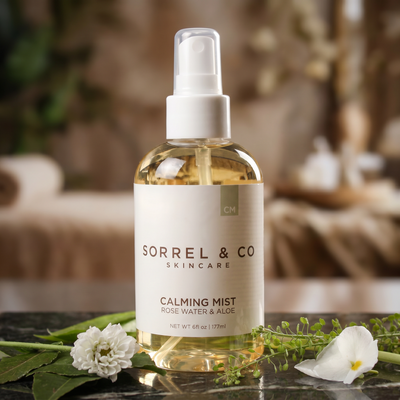
Rose water is one of the oldest cosmetic ingredients still in continuous use — documented in Persian medicine over a thousand years ago, central to traditional skincare across the Middle East, South Asia, and the Mediterranean for centuries. It is also one of the most over-promised ingredients in the modern skincare aisle, where it gets credited with everything from balancing pH to tightening pores to anti-aging, most of which the evidence does not support.
The truth about rose water is more modest, and more useful, than either the marketing or the skeptics suggest. It does real things. They are just smaller and more specific than the label copy implies. Here is what rose water actually is, what the research actually supports, and how to think about it in a facial mist.
What rose water actually is
Rose water is the aqueous byproduct of steam-distilling rose petals to extract rose essential oil. When steam passes through Rosa damascena or Rosa centifolia petals, it carries both the volatile oil and a fraction of water-soluble compounds. The oil is separated off and sold as a premium aromatherapy and fragrance material. What remains — the fragrant water phase, called a hydrosol — is rose water.
This origin matters because it tells you what is and is not in rose water. It contains the water-soluble fraction of the rose: trace amounts of the volatile aroma compounds such as citronellol, geraniol, and phenylethyl alcohol, small quantities of water-soluble polyphenols, and not much else. It is mostly water with a small, real, but limited cargo of active molecules. Any claim that rose water is a powerful treatment ingredient runs into this basic fact: there is not very much in it.
What rose water actually does
Within those limits, a few effects are genuinely supported.
Mild anti-inflammatory activity. The water-soluble polyphenols in rose hydrosol have demonstrated anti-inflammatory effects in laboratory studies, reducing the activity of inflammatory mediators in skin cell models. In practical terms, this translates to a mild soothing effect on irritated or reactive skin — not dramatic, but real, and consistent with the traditional use of rose water as a calming agent.
Light antioxidant activity. Those same polyphenols scavenge free radicals. The effect is modest compared to a dedicated antioxidant serum, but it is not nothing, and it contributes to the overall comfort profile of the product.
An aromatherapeutic effect. This one is easy to dismiss as fluff, but the research on scent and stress is real. The volatile compounds in rose have been studied for their effect on the autonomic nervous system, with several small controlled studies showing reduced markers of stress and lowered heart rate and blood pressure following rose-scent inhalation. Skin under chronic stress, with elevated cortisol, repairs its barrier more slowly. A genuinely calming sensory experience is not a frivolous addition to a skincare routine — it has a plausible downstream effect on the skin itself.
What rose water does not do
Several common claims do not hold up.
It does not balance your skin's pH. Rose water has a mildly acidic pH, generally in the 4.5–5.5 range, which happens to align with healthy skin. But applying an acidic liquid does not durably re-set your skin's pH — your acid mantle is regenerated by your own skin chemistry within hours regardless of what you mist on it. Rose water being pH-friendly means it will not disrupt your skin. It does not mean it actively corrects pH.
It does not tighten pores. The momentary tightening sensation comes from mild astringency — a transient contraction of the skin surface as the liquid evaporates. Pore size is determined by sebum production, genetics, and the structural support of the surrounding skin, none of which a hydrosol changes. The tightening is real as a sensation and meaningless as a structural effect.
It is not anti-aging in any meaningful sense. The antioxidant content is too low and too transient to drive the kind of sustained free-radical reduction that would matter for photoaging. Treat anti-aging claims on a rose water product as marketing.
The adulteration problem
Here is where label literacy matters most. Genuine rose hydrosol — the actual distillation byproduct — is a real agricultural product with a real cost. A great deal of what is sold as rose water is not this. It is water with added rose fragrance, sometimes a synthetic rose aroma, sometimes a small amount of real rose oil emulsified in. These products smell like rose and have essentially none of the polyphenol cargo that gives true hydrosol its mild functional benefits.
On a label, look for Rosa Damascena Flower Water or Rosa Centifolia Flower Water high in the ingredient list. That is genuine hydrosol. If instead you see Water (Aqua) followed much later by Fragrance (Parfum) with a rose note, you are buying scented water. Both can feel pleasant. Only one carries the actual rose compounds.
Why pair rose water with aloe
Rose water's main limitation is cargo: it does not carry much. Aloe vera addresses exactly this gap. Aloe leaf gel is rich in polysaccharides — primarily acemannan — that form a light, breathable hydrating film on the skin surface and have their own well-documented soothing and barrier-supportive properties.
Where rose water evaporates and leaves behind very little, aloe polysaccharides leave behind a humectant film that holds water at the surface. The combination gives a mist two complementary effects: the immediate sensory and mild anti-inflammatory benefit of the rose hydrosol, and the lingering surface hydration of the aloe. This is a more functional pairing than rose water alone, which on its own sits close to a purely sensory product.
The Sorrel approach
The Calming Mist is built on genuine Rosa damascena hydrosol — the distillation product, not a fragrance reconstruction — combined with aloe leaf juice for the polysaccharide hydration that rose water cannot provide on its own. We are deliberate about what we claim for it: it is a comfort and light-hydration step, an anti-inflammatory sensory moment, and a way to re-wet the skin before applying water-based actives. It is not a treatment serum, and we do not pretend it is.
That honesty is the point. A mist sold as a miracle sets you up for disappointment. A mist sold as exactly what it is — a genuinely calming, lightly hydrating, polyphenol-carrying hydrosol — earns a real place in a routine.
How to use it
Three genuinely useful moments for a rose-and-aloe mist.
After cleansing, before serums. Misting damp skin before applying a water-based serum or hyaluronic acid product gives those humectants more surface water to bind, which improves their performance. This is the most functionally useful moment to mist.
Mid-day comfort. Over makeup or bare skin, a mist is a low-stakes way to relieve the tight, dry feeling that comes from air conditioning, heating, or long screen sessions. The effect is real even if it is mostly about comfort.
As a calming ritual. The aromatherapeutic angle is legitimate. If a few seconds with a rose mist genuinely lowers your stress, that is a downstream benefit to your skin, not just your mood.
What a mist cannot do is replace a moisturizer. Misting alone, with no occlusive or emollient to seal it in, can actually accelerate water loss as the applied water evaporates and takes some surface moisture with it. Always follow a mist with the rest of your routine, or use it on skin that already has product layered on top.
For more on what mists can and cannot do, see our piece on setting mists and what they actually do beyond marketing.
Not sure whether hydration or calming is what your skin needs most? The Skin Plan maps your routine in about thirty seconds — no email required.