

Green tea shows up in skincare most often as an antioxidant — and it is a good one. But for oily and acne-prone skin specifically, green tea's polyphenols do something that has nothing to do with antioxidant activity and that very few products talk about: they appear to reduce sebum production at the hormonal level. This is one of the more interesting and under-marketed properties of topical green tea, and it is the reason a green tea gel makes sense for oily skin in a way that a generic antioxidant serum does not. Here is the mechanism, the evidence, and how to think about it.
The sebum problem, briefly
Sebum is the oily substance produced by the sebaceous glands. In the right amount it is protective — it is part of the skin's barrier and acid mantle. In excess, it contributes to the oily skin, clogged pores, and acne that affect a large fraction of people, particularly through adolescence and into adulthood.
Sebum production is driven substantially by androgens — hormones including testosterone and, more potently, its derivative dihydrotestosterone (DHT). The enzyme that converts testosterone to DHT is called 5-alpha-reductase, and it is highly active in sebaceous glands. More 5-alpha-reductase activity means more DHT locally, which means more sebum. This is the same enzyme pathway involved in androgenic hair loss, which is why some of the same molecules show up in both conversations.
How green tea polyphenols affect sebum
Here is the interesting part. The catechins in green tea — principally EGCG — have been shown to inhibit 5-alpha-reductase. By dialing down the conversion of testosterone to the more potent DHT within the sebaceous gland, green tea polyphenols reduce the hormonal signal that drives sebum production.
Several studies support this effect for topical green tea. Controlled trials of topical EGCG and green tea extract have measured reductions in sebum production over several weeks of use, alongside improvements in acne lesion counts. The sebum-reducing effect is modest and gradual rather than dramatic, consistent with the idea that it is modulating a hormonal pathway rather than stripping oil off the surface.
There are two supporting mechanisms layered on top of the 5-alpha-reductase effect.
Antioxidant protection of sebum itself. Sebum contains squalene, which oxidizes readily. Oxidized squalene is comedogenic and pro-inflammatory — it is part of why oily skin clogs and inflames. The antioxidant action of green tea polyphenols slows this oxidation, reducing one of the drivers of acne formation.
Anti-inflammatory action. EGCG's downregulation of inflammatory signaling, well documented in other contexts, helps calm the inflammation that turns a clogged pore into an inflamed lesion.
Why stripping oil backfires
The conventional approach to oily skin — harsh foaming cleansers, astringent toners, alcohol-heavy products — is built on the intuition that the solution to too much oil is to remove as much of it as possible. This backfires.
When you aggressively strip sebum and disrupt the barrier, the skin responds to the perceived dryness by upregulating sebum production. The result is a cycle: strip oil, trigger rebound oiliness, strip again. People with oily skin who feel like their skin gets oilier the more they wash are not imagining it. The mechanism is real.
An ingredient that modulates the hormonal driver of sebum, rather than just removing the oil after it is produced, sidesteps this cycle entirely. This is the conceptual advantage of green tea over the strip-it-off approach.
Why a gel format for oily skin
Texture matters for oily skin more than people give it credit for. Heavy creams and oil-based formulations sit on already-oily skin, contributing to the greasy feeling and potentially to congestion. A gel — water-based, lightweight, fast-absorbing, with no occlusive oils — delivers actives without adding to the oil load.
A green tea gel can therefore deliver the sebum-modulating polyphenols in a vehicle that oily skin actually tolerates and enjoys, which matters for compliance. The most effective product is the one a person will actually use daily, and oily skin tends to abandon heavy textures quickly.
Why pair green tea with bisabolol
Oily and acne-prone skin is frequently inflamed skin. Bisabolol — the calming active derived from chamomile — is a gentle anti-inflammatory that complements green tea's own anti-inflammatory action without adding any oil or heaviness. The pairing addresses oily skin from two angles simultaneously: green tea modulates the sebum and oxidation drivers, bisabolol calms the resulting inflammation. Both are lightweight, both are well tolerated, and neither contributes to congestion.
How to read a green tea gel label
Two things to check.
Standardized green tea or EGCG. As with any green tea product, Camellia Sinensis Leaf Extract tells you it is present but not how concentrated the active polyphenols are. A product specifying a standardized polyphenol percentage or purified EGCG is being transparent about the dose that drives the sebum effect.
A genuinely lightweight base. Check that the gel is actually water-based and not a cream wearing the word gel as marketing. The first few ingredients should be water and humectants, not oils or heavy emollients.
The Sorrel approach
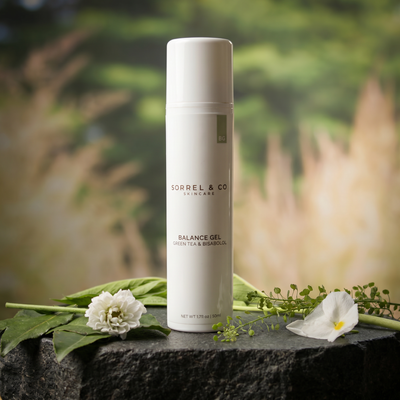
The Balance Gel is built around green tea polyphenols for sebum modulation and bisabolol for calming, in a genuinely lightweight water-based gel. The premise is that oily skin is best managed by addressing the drivers of excess oil — the hormonal conversion in the sebaceous gland and the oxidation of the sebum once produced — rather than by stripping the surface and triggering the rebound cycle.
It is a modulating product, not a degreaser. The distinction is the whole point.
How to use it
Apply to clean skin, morning or evening, after any water-based treatment serums and before moisturizer. Yes — oily skin still needs a moisturizer; the gel is a treatment step, not a substitute for hydration, and skipping moisturizer is one of the surest ways to trigger the rebound oiliness described above.
The sebum-modulating effect is gradual. Expect to judge it over four to eight weeks of consistent use, not days. Pair it with gentle, non-stripping cleansing for the best results — undermining it with a harsh cleanser works against the entire mechanism.
For more on the calming active in this gel, see our piece on bisabolol, the anti-inflammatory you have been overlooking, and for green tea's antioxidant role in pollution defense, EGCG and pollution defense.
Not sure whether oil control is your priority, or whether another concern comes first? The Skin Plan maps your routine in about thirty seconds — no email required.